What Is Home Automation?
Home automation is the use of smart technology to automatically control and manage different devices and systems within a home.
Instead of operating every appliance separately, a centralized automation system can connect and control devices such as:
- 💡 Lighting systems
- 🌬️ Air conditioners
- 🌀 Ceiling fans
- 📹 Security cameras
- 🔐 Smart locks and security systems
- 🪟 Curtains and blinds
- 📺 Entertainment systems
- 🌡️ Temperature and climate controls
A smart control panel, smartphone application, voice assistant, or automated schedule can be used to operate these systems.
How Does Home Automation Work?
At the heart of a home automation system is a central control system that communicates with connected devices throughout your home.
For example, a single touch on your smart control panel could turn off the lights, switch off the air conditioner, close the curtains, and activate your security system.
You can also create customized scenes or routines.
Good Morning ☀️
At a scheduled time, your system could:
- Open the curtains
- Turn on selected lights
- Adjust the room temperature
- Switch on other appliances
Good Night 🌙
With one command, you could:
- Turn off unnecessary lights
- Switch off appliances
- Close curtains
- Activate security systems
- Lock smart doors
This means your home can respond automatically instead of requiring you to manage every device manually.
Key Benefits of Home Automation
1. Greater Convenience
One of the biggest advantages of home automation is convenience.
Instead of walking around the house to operate different devices, you can control them from a single interface. Whether you're sitting on the sofa or away from home, connected devices can be managed through your chosen control system.
2. Enhanced Home Security
Smart security can give homeowners greater control and visibility.
Connected cameras, sensors, smart locks, and alerts can work together to help you monitor your property. You can also receive notifications when unusual activity is detected.
Home automation doesn't just make your home smarter—it can make it more secure and easier to monitor.
3. Energy Efficiency
Smart automation can help reduce unnecessary energy consumption.
Lights, air conditioners, and other appliances can be scheduled or automatically switched off when they aren't needed. Sensors can also help determine whether a room is occupied.
For example, lights can automatically turn off when nobody is present, helping avoid unnecessary electricity usage.
4. Comfort & Personalization
Every family has different habits and preferences.
With automation, you can create personalized settings for different situations. Adjust lighting, temperature, curtains, entertainment, and other devices according to your preferences.
Your home can become a space that adapts to your lifestyle.
What Can You Automate in Your Home?


💡 Smart Lighting
Control individual lights, groups of lights, brightness, and schedules from a centralized system. You can also create lighting scenes for different activities.
🌬️ Air Conditioning & Climate Control
Manage your AC and temperature settings conveniently. Automation can help maintain a comfortable environment while avoiding unnecessary operation.
🌀 Fan Control
Turn fans on or off and integrate them into your daily routines and scenes.
📹 CCTV & Security
Integrate security cameras and other security devices with your smart-home ecosystem for easier monitoring and control.
🪟 Curtains & Blinds
Automated curtains and blinds can open or close based on time, sunlight, or your preferred routine.
📺 Entertainment
Create an environment for watching movies, listening to music, or relaxing by controlling compatible entertainment devices from one interface.
A Single Control Panel for Your Home
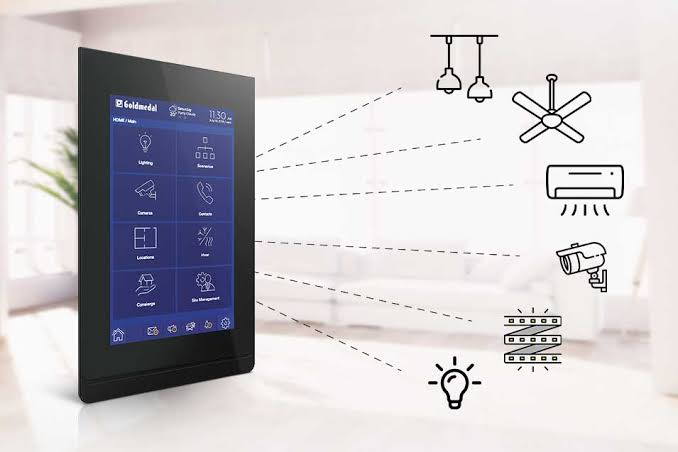
The image above represents one of the key ideas behind modern home automation: centralized control.
Instead of having separate controls for every device, a smart panel can bring multiple functions together in one place.
From a single screen, homeowners can potentially manage:
Lighting → Fans → AC → Security → Curtains → Appliances → Entertainment
This creates a cleaner, simpler, and more intuitive way to interact with your home.
Is Home Automation Only for New Homes?
Not necessarily.
Home automation can be considered for both new construction and existing properties, depending on the technology and infrastructure being used.
For a new home, automation can be planned during the electrical and interior design stages. For an existing home, suitable wireless or retrofit solutions may allow smart devices to be introduced without completely redesigning the electrical system.
The important thing is to choose an automation approach based on your home's requirements, budget, infrastructure, and future expansion plans.
Start Small and Build Your Smart Home
You don't have to automate everything at once.
A practical approach is to start with the areas that provide the most value—for example:
- Smart lighting
- Fan and AC control
- Security cameras
- Curtains and blinds
- Centralized control
- Customized scenes and schedules
As your needs grow, additional devices can be integrated into the system.
The Future of Home Living Is Smart
Home automation is more than simply controlling appliances with a smartphone. It is about creating a home that is convenient, connected, efficient, secure, and personalized.
As smart-home technology continues to evolve, automation will become increasingly integrated into our everyday lives.
The goal isn't to add technology for the sake of technology. The goal is to use technology to make everyday living simpler, safer, and more comfortable.
Ready to Make Your Home Smarter?
Whether you're building a new home or upgrading an existing one, the right home automation solution can transform the way you interact with your living space.
Smart Home. Smarter Living. Better Comfort.